

VICTRON EV CHARGING STATION NS
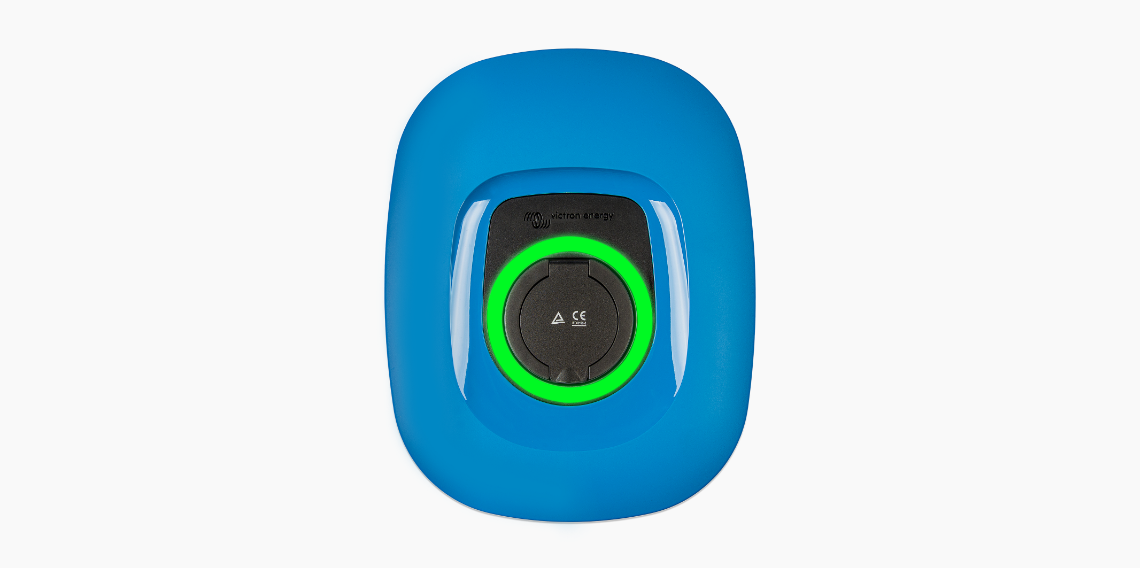
The Victron Energy EV Charging Station NS is designed to operate in both single-phase and three-phase installations. It delivers a maximum rated power of up to 22 kW in three-phase operation and up to 7.3 kW in single-phase operation. The charging current can be adjusted between 6 and 32 A to suit the current available in the installation and the vehicle’s requirements.
The unit offers three clearly differentiated operating modes. In manual mode, the user selects the output current and can start or stop charging when the vehicle is connected. Charging power can be adjusted from the web interface, a GX device and the VRM portal, or through VictronConnect. This mode allows the user to decide directly when to charge and at what current.
In automatic mode, the station detects when surplus energy is available and uses only that energy to charge the vehicle. Charging can therefore be coordinated with the energy available in a Victron system. In scheduled mode, the scheduler allows specific charging intervals to be defined; for example, selected night-time hours when the electricity tariff may be more favourable.
The NS version has no integrated display and concentrates configuration, monitoring, and control in its communication interfaces. The 2.4 GHz WiFi 802.11 b/g/n connection can be configured in access-point or station mode. Bluetooth enables VictronConnect to display operating parameters and session statistics on a compatible device.
The EV Charging Station NS does not have its own display. When integrated into a Victron system with a GX device, it can be controlled and monitored from a touchscreen associated with the GX system, from Remote Console, or through the VRM portal. VRM provides real-time information and customised reports for configurable periods. Data communication uses Modbus TCP over WiFi and Bluetooth for access with VictronConnect.
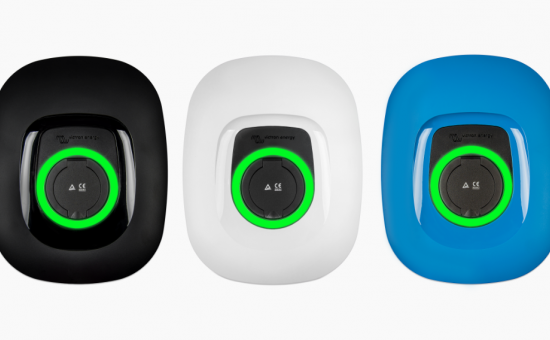
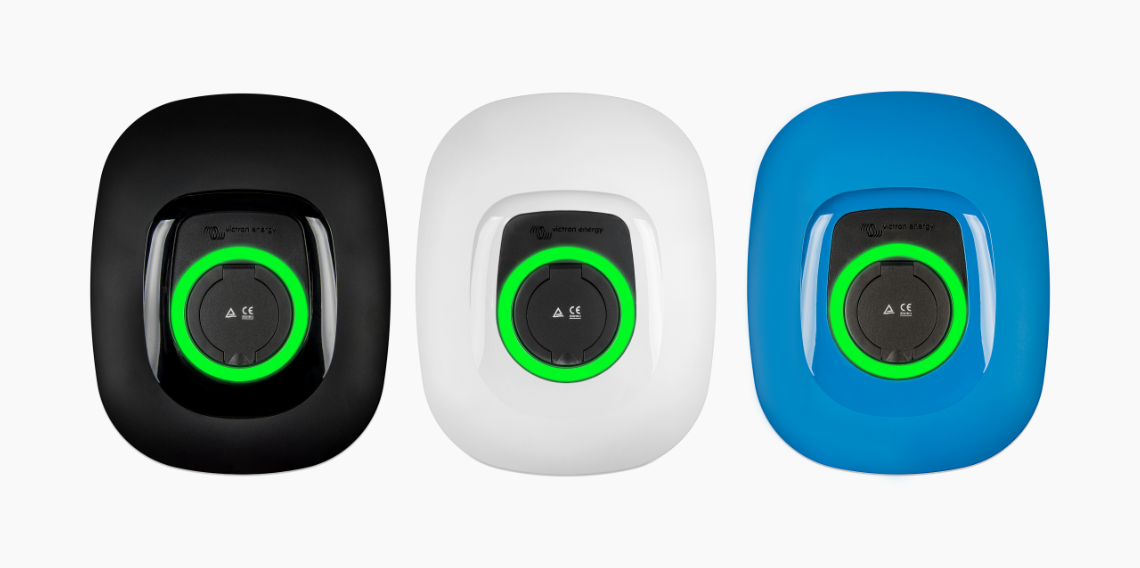
A programmable RGB light ring around the charging port provides a visual indication of states such as disconnected, charging, or charging complete. It offers 55 effects configurable through the integrated web interface. The connector complies with IEC 62196 Type 2 and the enclosure has an IP44 protection rating. It is supplied with a blue front cover; black and white front covers are available separately.
External protective devices must be provided for installation. The datasheet specifies an external circuit breaker and recommends 40 A as the means of disconnection; it also requires an external residual-current device. These protective devices must not be confused with the internal detection of a welded relay contact, missing protective conductor, missing earth connection, or short-circuited CP.
How it works
Manual mode: The user sets the current between 6 and 32 A and controls the start or stop of charging.
Automatic mode: The station detects surplus energy and uses only that surplus to charge the vehicle.
Scheduled mode: The user defines the time intervals during which charging is to take place.
Key features
Single-phase and three-phase charging: Up to 7.3 kW in single-phase operation and 22 kW in three-phase operation.
Adjustable current: Output current adjustable between 6 and 32 A.
Manual mode: Allows the current to be set and charging to be started or stopped directly.
Automatic mode: Detects surplus energy and uses only that energy for charging.
Scheduled mode: Allows charging time intervals to be defined using a scheduler.
Control: The station is configured and monitored through VictronConnect, the web interface or, when integrated into a GX system, through its interfaces and the VRM portal.
WiFi and Bluetooth: Configuration, monitoring, and control through the web interface and VictronConnect.
GX and VRM integration: Control and monitoring through the GX system interfaces, Remote Console, and the VRM portal.
RGB status indicator: Programmable light ring with 55 configurable effects.
Type 2 connector: Charging port compliant with IEC 62196 Type 2.
Recommended applications
- Electric vehicle charging in single-phase or three-phase installations.
- Energy installations where the available surplus energy is to be used for charging.
- Victron systems with a GX device and monitoring through the VRM portal.
- Scheduled charging during time periods defined by the user.
- Installations requiring the charging current to be adjusted between 6 and 32 A.
Product advantages
- One unit for single-phase or three-phase power supply.
- Clear choice between manual control, surplus-energy charging, and scheduled charging.
- Access via WiFi or Bluetooth; the charging station does not have its own display.
- Integration with GX devices, Remote Console, and the VRM portal.
- Quick status indication through the RGB light ring.
- No ventilation required, according to the datasheet.
Installation requirements that must remain visible
- An external circuit breaker is required; Victron recommends 40 A.
- An external residual-current device is required.
- The protective devices must be selected and installed to suit the installation and applicable regulations.
Specifications
| Electrical characteristics | |
|---|---|
| Model / part number | EV Charging Station NS / EVC200300200 |
| Input voltage range | 170 – 265 VAC |
| Rated charging current | 32 A per phase |
| Rated power | 22 kW |
| Maximum stated single-phase power | 7.3 kW |
| Output current range | 6 – 32 A |
| Configurable maximum current | 6 – 32 A |
| Self-consumption | 15 mA at 230 V |
| Connector type | IEC 62196 Type 2 |
| Control and communications | |
| Operating modes | Manual, automatic and scheduled |
| WiFi standards | 802.11 b/g/n; 2.4 GHz only |
| WiFi configuration | Access point or station mode |
| Data communication | Modbus TCP over WiFi and Bluetooth |
| Control methods | Web page, GX device via Modbus TCP and VictronConnect via Bluetooth |
| Configurable minimum current | 6 – 32 A |
| Light ring | Programmable RGB; 55 configurable effects |
| Price-per-kWh calculator | Configurable in EUR; default value 0.13 |
| Protection and environmental conditions | |
| Means of disconnection | External circuit breaker; 40 A recommended |
| Residual-current protection | An external RCD is required |
| Operating temperature | From −25 °C to +50 °C |
| Storage temperature | From −40 °C to +80 °C |
| Humidity | 95%, non-condensing |
| Enclosure | |
| Enclosure colour | Light blue (RAL 5012), traffic black (RAL 9017) or traffic white (RAL 9016) |
| Connection terminals | 6 – 10 mm² / AWG 10 – 8 |
| Protection rating | IP44 |
| Ventilation | Not required |
| Weight | 3 kg |
| Dimensions (height x width x depth) | 372 x 292 x 122 mm |
| Standards and detection functions | |
| Standards | IEC 61851-1 and IEC 61851-22 |
| Detection functions | Welded relay contact; missing protective conductor; missing earth connection; short-circuited control pilot |
Downloads
Especificaciones Estación de carga Victron Energy EV NS
Datasheet Victron Energy EV NS
Do you want more information about this product?
bornay@bornay.com | (+34) 965 560 025 | Skype