
Hybrid Wind and Solar Photovoltaic Off-Grid System
Hybrid off-grid systems combine a wind turbine and solar photovoltaic panels to provide electrical power in locations without access to the utility grid. By harnessing the complementary nature of wind and solar energy, these systems deliver a reliable, efficient, and sustainable power supply throughout the year for homes, farms, telecommunications, and other remote installations.
What is a Hybrid Wind and Solar Photovoltaic Off-Grid System?
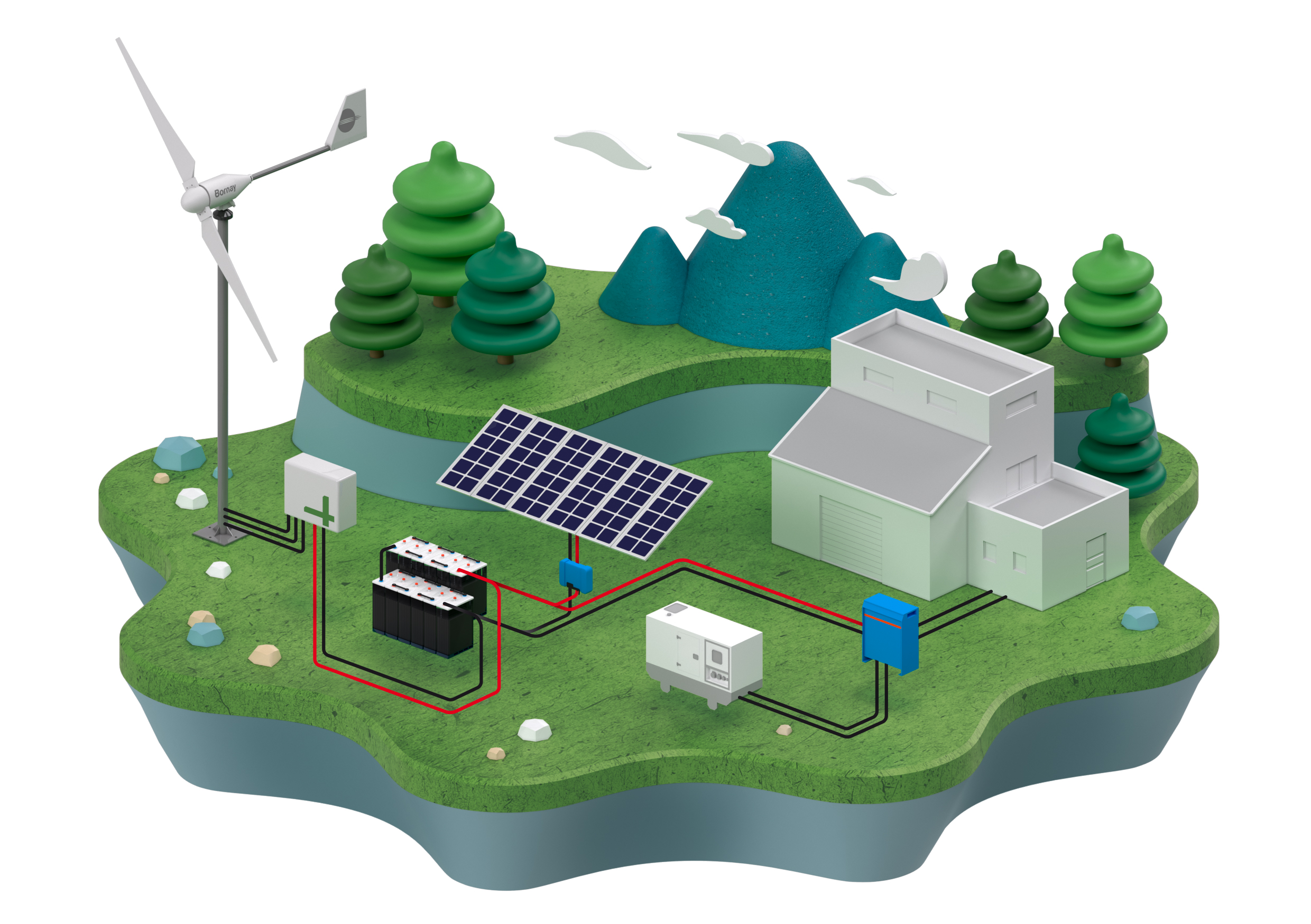
A hybrid wind and solar photovoltaic off-grid system is an electricity generation solution designed to provide power in locations where there is no access to the utility grid or where grid connection is technically or economically unfeasible. By combining a wind turbine with solar photovoltaic panels, the system harnesses two complementary renewable energy sources to deliver a more stable and reliable electricity supply throughout the year.
While solar panels generate electricity during daylight hours, the wind turbine produces energy whenever there is sufficient wind, including at night and on cloudy days. This complementarity reduces dependence on a single energy source and increases energy availability in every season.
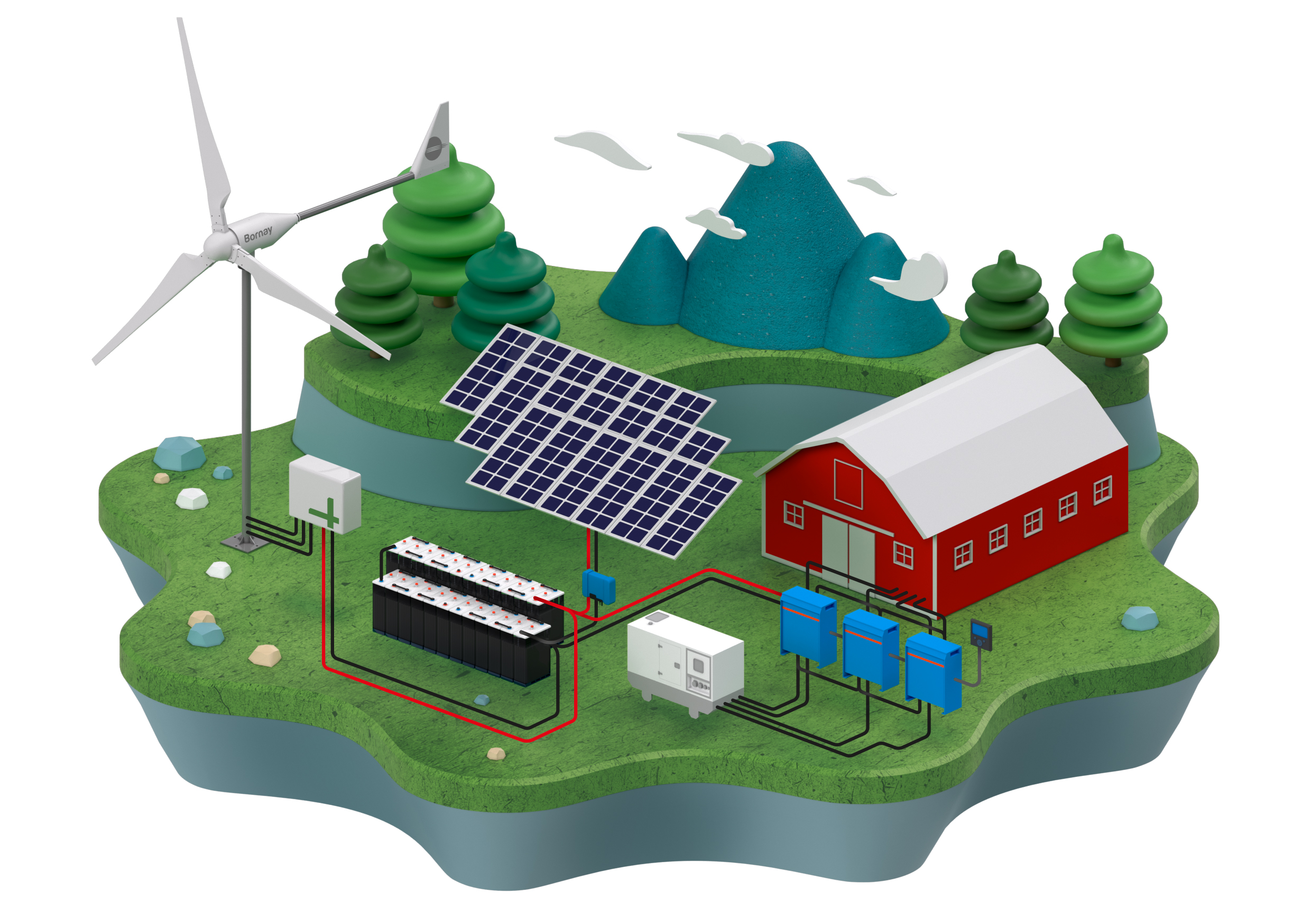
The electricity generated by both systems is managed through their respective charge controllers and stored in a battery bank, which provides energy whenever generation is insufficient. When alternating current (AC) is required to power household appliances, tools or other conventional equipment, an inverter converts the stored direct current (DC) into the appropriate AC voltage.
These hybrid systems provide an efficient, sustainable and low-maintenance solution for supplying electricity to off-grid homes, farms, mountain shelters, monitoring stations, pumping installations and any other remote location requiring an autonomous power supply.
Why Combine Wind and Solar Energy?
The main advantage of a hybrid system is that both renewable energy sources naturally complement each other. Solar generation generally reaches its highest output during summer and daylight hours, while wind resources are often stronger at night, during winter, or under adverse weather conditions. This combination provides a more balanced energy production throughout the day and across the seasons, maximising the use of available renewable resources.
In addition to improving power availability, a hybrid system can reduce the required battery storage capacity and minimise the use of backup generators, lowering operating costs and reducing associated emissions.
At Bornay, we design hybrid renewable energy systems tailored to the requirements of each project, sizing every installation according to energy demand, available wind and solar resources, and the specific characteristics of the site to ensure a reliable, efficient and fully autonomous power supply.
Components:
Wind Turbine
Generates electricity from wind energy, producing power both day and night whenever suitable wind conditions are available. Its rated power should be selected according to the energy requirements of the installation. Bornay offers 1, 3 and 5 kW wind turbines, specifically designed for integration into hybrid solar photovoltaic systems.
Wind Charge Controller
Controls and optimises the operation of the wind turbine by converting the generated alternating current (AC) into direct current (DC) for charging the battery bank. It also manages the charging process and protects the batteries against overcharging, helping to extend their service life and ensuring safe system operation.
Solar Panels
Generate electricity from solar radiation, producing energy during daylight hours. Combined with the wind turbine, they form a hybrid renewable energy system that takes advantage of two complementary energy sources, improving energy production and availability throughout the year. The number and power of the photovoltaic modules are sized according to the energy demand of the installation.
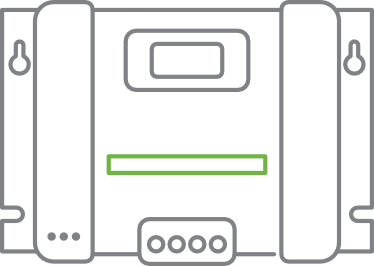
Solar Charge Controller
Manages the electricity generated by the solar panels and controls the charging process of the battery bank. It optimises system performance and protects the batteries against overcharging and deep discharge, ensuring efficient operation and extending battery life.

Batteries
Store the electricity generated by the wind turbine and solar panels, supplying power whenever renewable generation is insufficient. They form the energy storage system of the installation, ensuring a continuous electricity supply during the night, periods of low solar radiation, or when wind conditions are insufficient. Battery capacity should be sized according to the required energy consumption and autonomy.
Bornay offers both lead-acid batteries and lithium batteries for this type of application.

Inverter – Inverter/Charger
Converts the direct current (DC) stored in the batteries into 230 V alternating current (AC) suitable for powering standard household appliances and electrical equipment.
Inverter/charger models also incorporate a battery charger that allows battery charging from an external AC source, such as a generator or the utility grid when available.
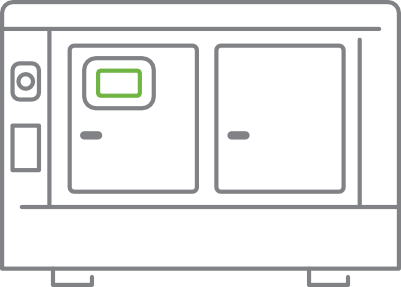
Backup Generator
Provides a backup power source when renewable energy production is insufficient to meet demand or when the battery charge level becomes too low. It typically operates on fossil fuels and can start automatically via the inverter/charger to supply the installation and recharge the batteries, ensuring uninterrupted power under all circumstances.
Other features / options:
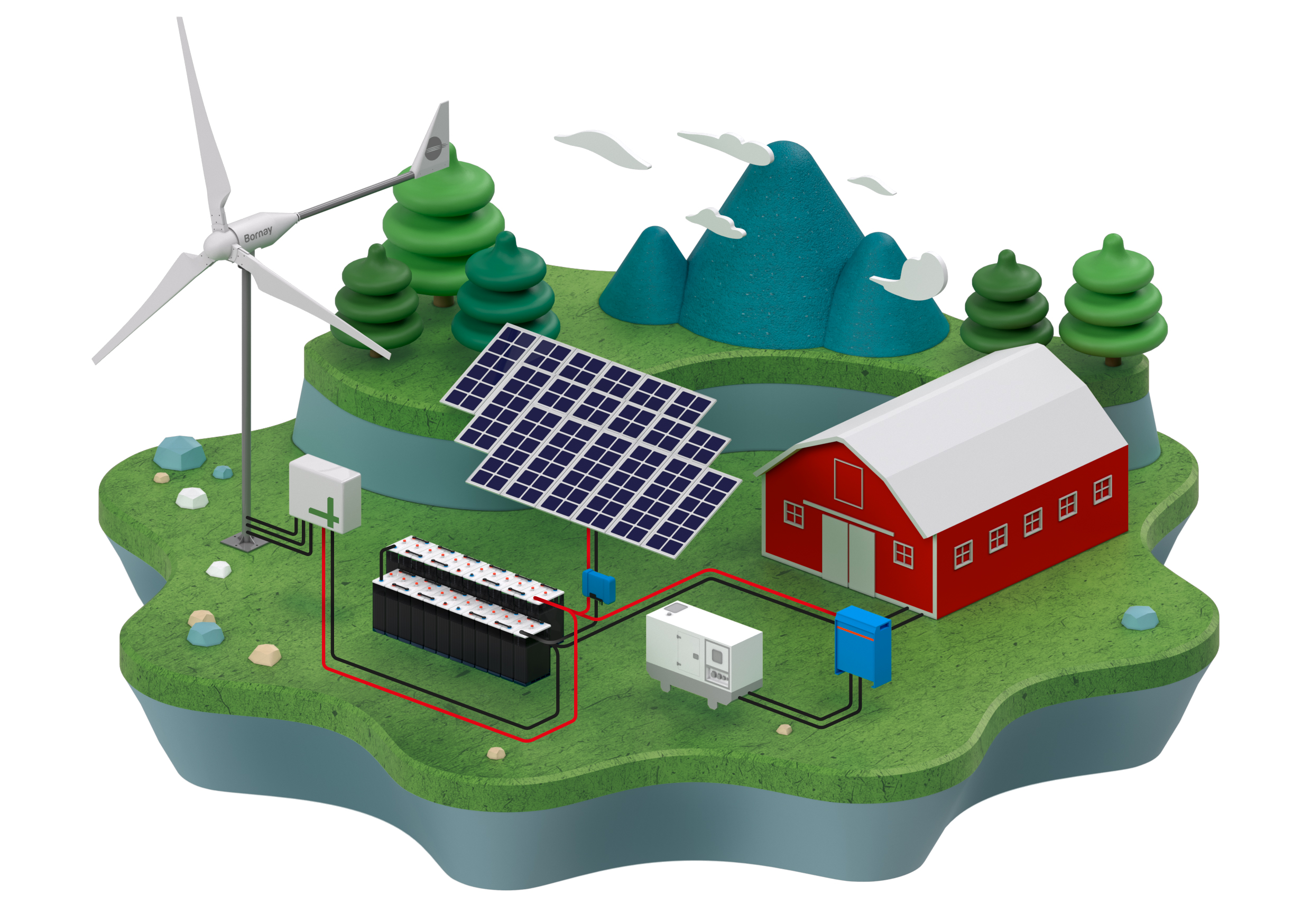
Multiple Options
Off-grid systems can be configured with a wide range of options, including 12, 24 or 48 V battery banks, depending on the system power and the energy requirements of each project.
Different energy storage technologies are also available, including lead-acid and lithium batteries, allowing the most suitable solution to be selected according to the required autonomy, performance, service life and budget.
Scalability
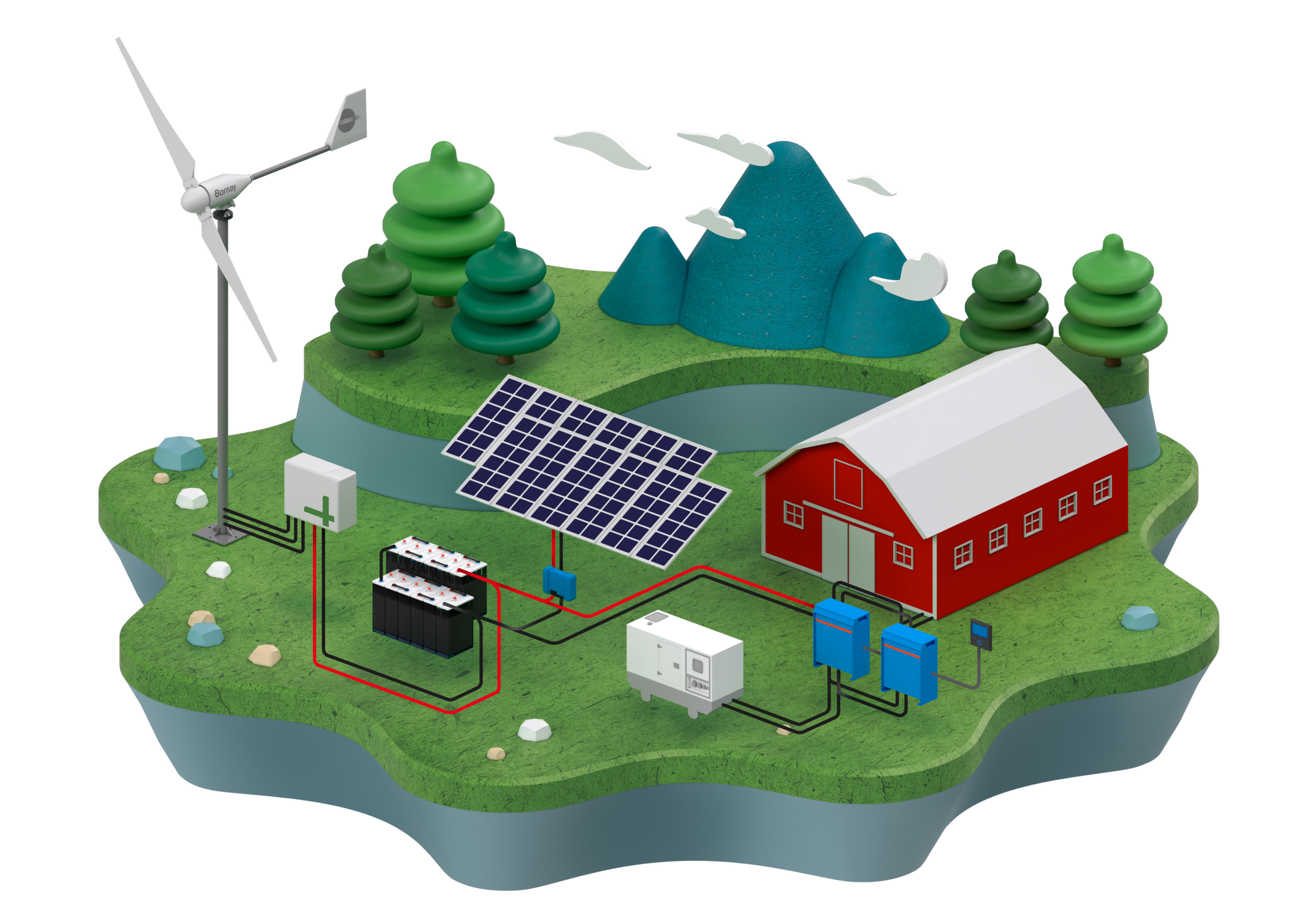
Hybrid off-grid systems are designed to grow alongside the user's energy requirements. Their modular architecture makes it easy to expand the installation by adding more solar panels, increasing the battery bank capacity*, or installing higher-power wind turbines whenever required.
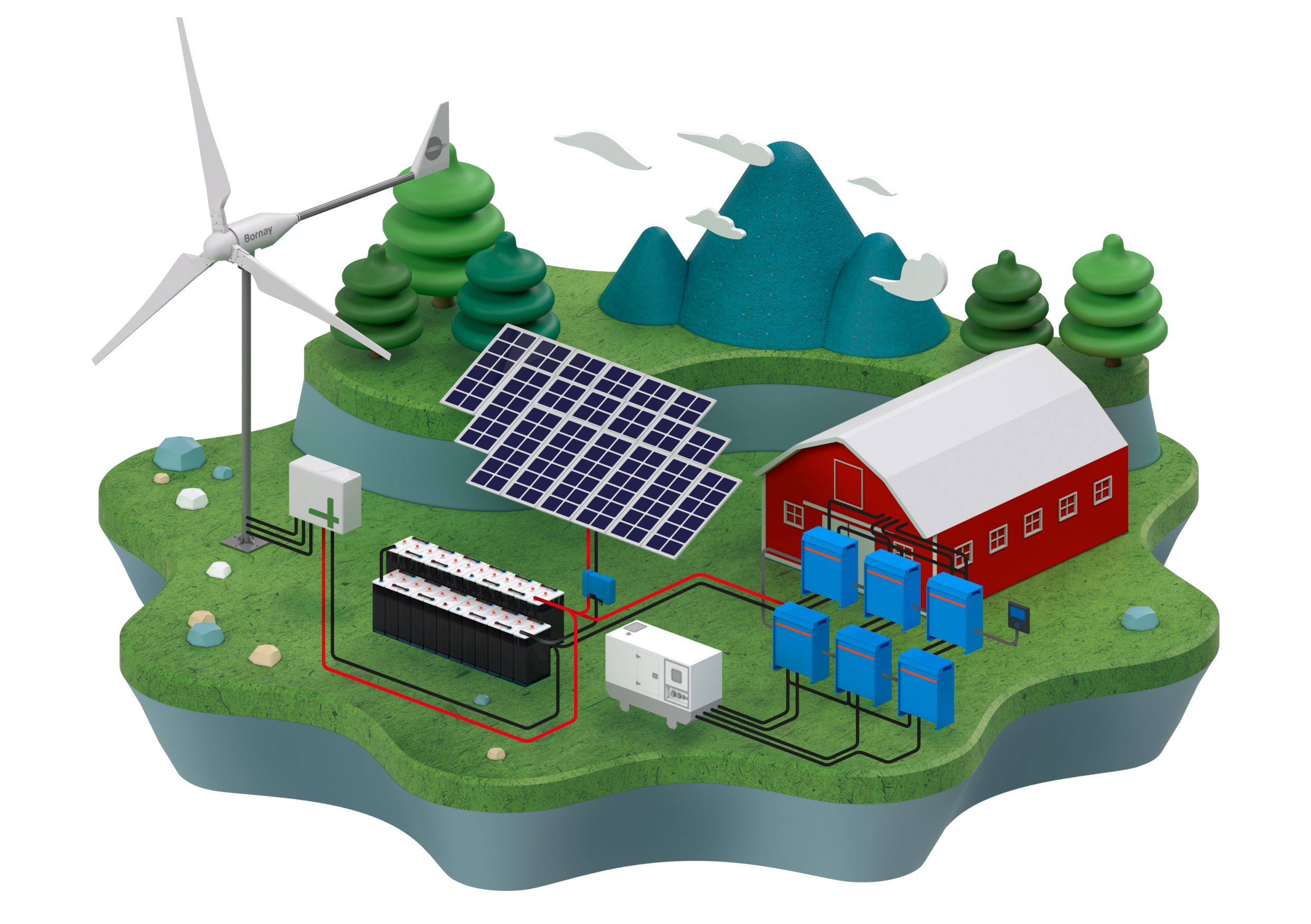
System output can also be increased by installing parallel-connected inverters, allowing additional electrical loads to be supplied without replacing the existing installation. This flexibility enables future expansions while optimising the initial investment and providing a solution ready to evolve over time.
Three-Phase System
When the installation needs to supply three-phase loads or higher power demands, the system can be configured with three synchronised inverters, providing a 400 V three-phase output. This solution is ideal for powering industrial machinery, high-power pumps, agricultural installations, workshops and other equipment requiring three-phase electricity, while maintaining all the advantages of a hybrid off-grid system.
Expansion
The parallel configuration of three inverters also provides greater flexibility and scalability, allowing the installation to adapt to future expansions and increasing energy demand without modifying the renewable generation system.