
Grid-Connected Wind Power System
Grid-connected wind power systems generate electricity from wind energy for self-consumption, reducing the amount of electricity drawn from the utility grid. When the wind turbine produces more energy than the installation requires, the surplus electricity can be fed into the grid, maximizing the use of renewable energy and reducing energy costs.
What is a Grid-Connected Wind Power System?
A grid-connected wind power system is an installation designed to generate electricity using a wind turbine and supply it directly to a home, business or facility connected to the utility grid.
The wind turbine converts the kinetic energy of the wind into electricity, which is managed by a controller and a grid-tied inverter. The inverter adapts the generated energy to the characteristics of the electrical grid by synchronizing voltage and frequency, enabling safe and efficient operation.
The electricity generated is primarily used to supply the installation's own consumption. When wind generation exceeds demand, the surplus energy can be exported to the utility grid. When wind production is insufficient, the required energy is automatically supplied by the grid, ensuring a continuous electricity supply.
Grid-connected wind power systems provide an efficient solution for homes, agricultural and livestock farms, industrial facilities, commercial buildings and any other application seeking to reduce electricity consumption through the use of renewable wind energy.
Why Use Wind Energy for Self-Consumption?
Wind energy makes it possible to harness a renewable resource available throughout the year, reducing dependence on the utility grid and lowering electricity consumption.
Unlike other renewable technologies, a wind turbine can generate electricity both day and night whenever suitable wind conditions are available. This capability makes it possible to cover energy demand at any time of the day and complement other renewable sources when integrated into a hybrid system.
In addition, the possibility of exporting surplus electricity to the grid maximizes the use of the energy generated and improves the overall profitability of the installation.
At Bornay, we design grid-connected wind energy solutions tailored to the needs of each project, sizing the wind turbine, controller and inverter to ensure efficient, safe and reliable operation.
Grid-Connected Wind Power Installation
General Description
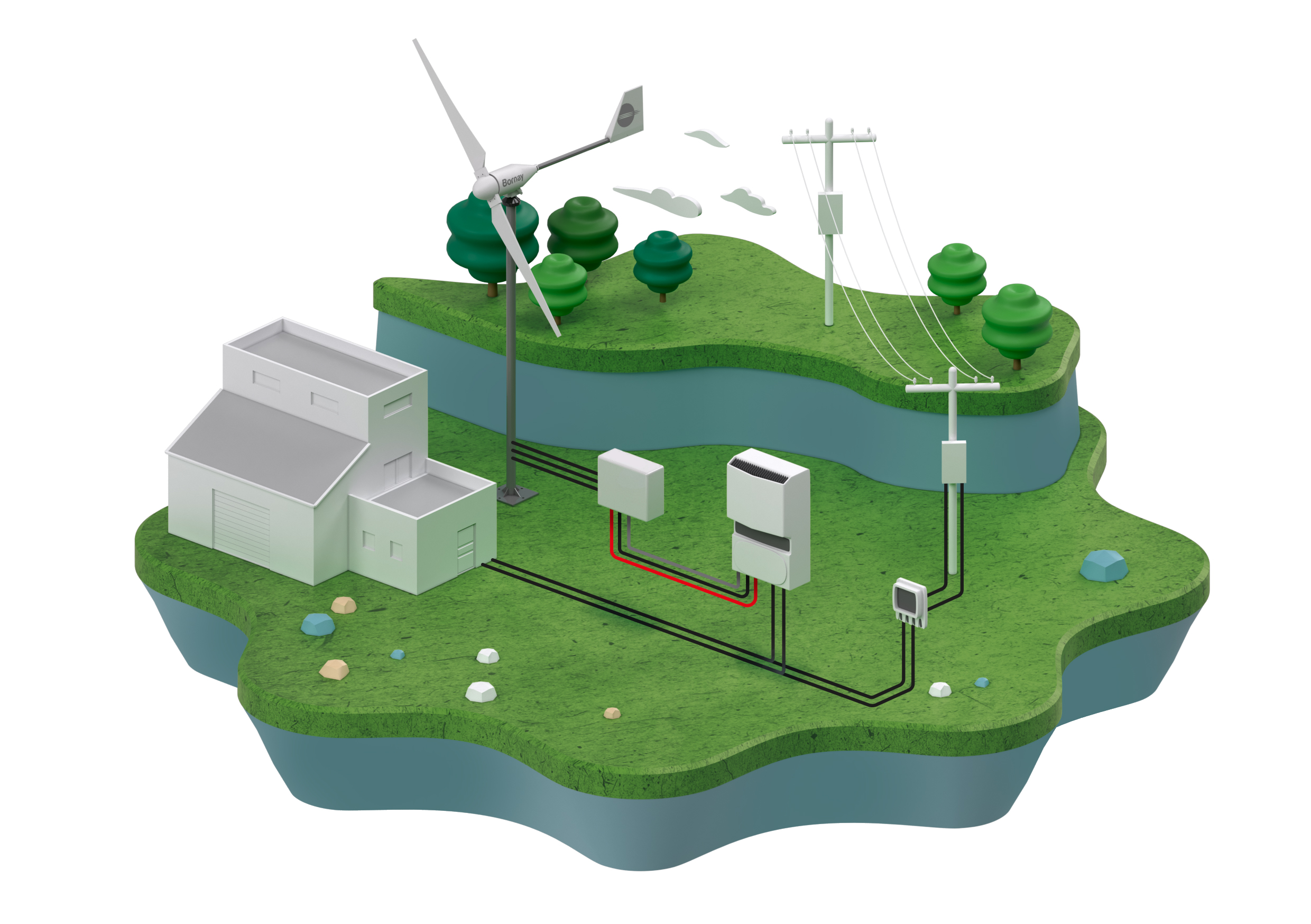
The grid-connected installation consists of a wind turbine that converts wind energy into electricity, generating power both day and night whenever suitable wind conditions are available.
The electricity generated is managed by a controller and a grid-tied inverter, which supervise the operation of the wind turbine, adapt the generated energy to the characteristics of the electrical grid and safely supply power to the installation.
The electricity produced is primarily used to meet the energy demand of the home, business or facility. When wind generation exceeds consumption, surplus electricity can be exported to the grid. When demand is higher than production, the required electricity is automatically supplied by the utility grid.
This solution reduces electricity consumption from the grid, maximizes the use of renewable energy and lowers the installation's energy costs.
Wind Turbine
Generates electricity from wind energy, supplying renewable power for self-consumption whenever suitable wind conditions are available. Its power rating is sized according to the electrical demand and the characteristics of the installation site. Bornay offers 1, 3 and 5 kW wind turbines specifically designed for grid-connected applications.
Controller
Controls and optimizes the operation of the wind turbine, managing the generated energy and protecting the system against adverse operating conditions. It also ensures the safe and efficient operation of the entire installation.

Grid-Tied Inverter
Converts the electricity generated by the wind turbine into AC power synchronized with the utility grid, adapting voltage and frequency for use within the installation or for exporting surplus energy to the grid.
Utility Grid
The utility grid supplies electricity when the wind turbine does not generate enough energy to meet demand and receives surplus energy whenever generation exceeds consumption.
Other features / options:

Autoconsumo con compensación de excedentes
Cuando la producción del aerogenerador supera el consumo instantáneo de la instalación, la energía excedentaria puede inyectarse a la red eléctrica. Dependiendo de la normativa vigente y de la modalidad de autoconsumo, estos excedentes pueden compensarse en la factura eléctrica, mejorando la rentabilidad de la instalación.
Monitorización
Los sistemas de conexión a red pueden incorporar plataformas de monitorización que permiten visualizar en tiempo real la producción del aerogenerador, el consumo de la instalación, la energía intercambiada con la red y el rendimiento global del sistema, facilitando su supervisión y mantenimiento.
Escalabilidad
La instalación puede ampliarse incorporando aerogeneradores adicionales o equipos de mayor potencia, adaptándose al crecimiento de las necesidades energéticas de la instalación y permitiendo incrementar progresivamente la generación renovable.